 With over two decades of experience at the intersection of nature, place, people, and the built environment, Estelle Bailey MBE brings a systems-thinking lens to some of today’s most pressing challenges. As Chief Executive of Berks, Bucks & Oxon Wildlife Trust and External Trustee at the Useful Simple Trust (Trust), she has long championed joined-up approaches to environmental and social change.
Here, Estelle reflects on how place-based strategies can unlock nature recovery, climate resilience, and stronger social outcomes:
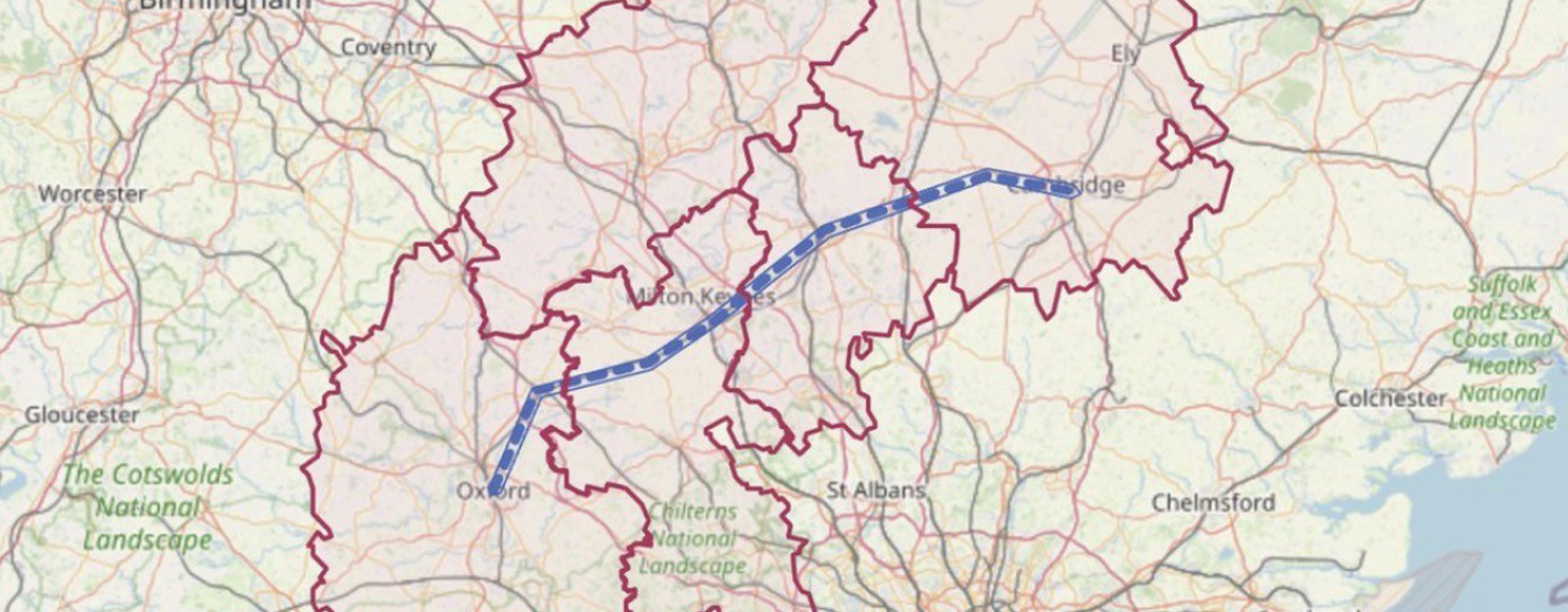
When travelling between Oxford and Cambridge, I often find myself looking out of the window more than I probably should. It’s a landscape I know well: fields stitched together by hedgerows, rivers moving quietly through the land, pockets of woodland holding on. On a good day, a red kite hangs in the sky, or a hare moves quietly along a field margin; half seen, gone in a moment. It’s beautiful, but fragile. And once you start to see it like that, it’s hard to unsee.
These landscapes have been hard worked for generations to produce food. A lot of it. Alongside this, we’ve seen significant population growth coupled with an increasingly intensive and often unsustainable land use. New settlements, such as Milton Keynes, were deliberately designed with the future in mind and are now ready for their next evolution. This is also a highly water-stressed part of the country. How water moves, is absorbed and stored is not a secondary consideration; it’s fundamental.
 Nature as infrastructure, not an afterthought
I’ve spent much of my career working in nature conservation, focused on restoring what’s been lost and protecting what remains. More recently, I’ve found myself drawn deeper into the built environment, not as a departure but as a realisation.
The way we design and build our towns, infrastructure, and buildings is one of the most powerful forces shaping the future of nature. This is what drew me to my Trustee roles at both the Trust and UK Green Building Council (UKGBC).
If we’re serious about nature’s recovery, we have to change the system that’s driving its decline. The Oxford-Cambridge Growth Corridor brings this into sharp focus. Here is a real ambition. New homes, new infrastructure, new economic opportunities. It matters, but sits within a landscape already under pressure. Wildlife has declined dramatically since the 1970’s; habitats are fragmented, and the natural systems that support water, soil, and climate resilience are being stretched.
I have often seen growth vs nature described as a tension. I don’t think that framing holds anymore. The more time you spend outside, really noticing what’s going on, the more obvious it becomes that nature isn’t something sitting at the edges; it’s doing the heavy lifting.
Nature regulates water when it rains, cools places when temperatures rise, supports the soils that grow our food, and underpins our health and wellbeing. Put simply, nature isn’t just a ‘nice to have’; it’s infrastructure. And yet we continue to design as if it isn’t.
Too often, we build and then we mitigate engineering solutions to problems that better design could have avoided: flooding, overheating, declining biodiversity, poorer health outcomes. For every pound invested in protecting nature, considerably more is spent driving its loss. This is a deeply flawed system; not an inevitability, but a consequence of choices.
Where does this path lead? To a generation growing up in places dominated by concrete and tarmac, with fewer chances to experience the natural world as part of everyday life, and a gradual resetting of expectations. Degraded nature and climate instability are becoming normal.
Designing with systems, not against them
This trajectory is shaped, in large part, by design. The opportunity in the Growth Corridor is to take a different approach. To start with the land itself, we must understand how water moves, how soils function, where habitats can be strengthened or connected, and recognise that food production, land economics, and nature recovery are part of the same system. They’re not separate conversations.
Nature-led design is not about adding green features at the end of a process. It’s about allowing natural systems to shape the form and function of places from the outset.
It’s here that built environment professions have enormous influence. Architects, engineers, planners, and designers make choices every day that determine whether nature is excluded or embedded; whether materials are extractive or regenerative, and whether buildings and infrastructure work with natural systems or against them.
In Europe, we are starting to see what ‘good’ looks like. In the Netherlands, water and landscape shape development decisions from the very beginning – as structure, not mitigation. In Copenhagen, green and blue infrastructure is designed to manage climate risk while creating better places to live. In Freiburg, whole districts have been built around energy, nature, and livability as a single system. These are signals of a positive approach.
The UK is beginning to build the frameworks to support this shift. The UKGBC’s Net Zero Carbon Buildings Framework has helped bring clarity and consistency across the built environment. Its emerging work on nature and biodiversity is starting to do the same, giving practitioners tools to integrate nature more meaningfully into design and delivery.
 What kind of future are we designing for?